- Home
- Quilt Binding
Quilt Binding and Other Edge Finishes
A quilt's only a UFO 'til it's bound...
This post contains affiliate links for which I receive compensation.
Quilt binding is just one of many ways to finish your quilt's edges. Do you know which kind to use?
Here we'll discuss:
- Characteristics of a good binding, and finally,
Your Quilt Binding Choices
The most common way to finish a quilt's edges is to bind it. Binding can be done in several ways.
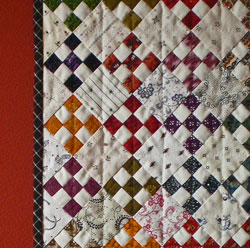 An example of plaid, double-fold, bias binding
Double Fold Binding
(sometimes called French Fold Bias Binding)
This is the most used and durable quilt binding.
It is made from a double layer of quilting fabric using either the bias or straight of grain.
Easy to apply.
A good choice for any type of quilt. Wears well.
For more information, see learn how to make continuous bias quilt binding with:
Single Fold Binding
This type of binding, as the name suggest, covers the quilt's edges with a single layer of fabric. It can be made of either bias or straight grain strips. It's easy to attach. Good for quilts that will be used lightly and washed infrequently.
Good for wall quilts.
Self-binding
(sometimes called Edge-turned Binding)
This type of binding protects the quilt's edges with just a single layer of fabric. For this method, the quilt's backing fabric is trimmed straight and wrapped around to the front of the quilt and stitched in place to form the binding. Good for quilts that will be used lightly and washed infrequently. Good for wall quilts.
Commercially-made Binding Tape
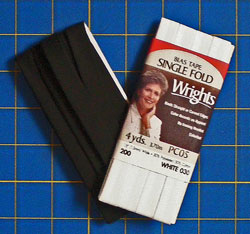 Precut & packaged bias binding tape: Black double fold (l), White single fold (r)
Commercially made binding can be a great time saver, if you choose the right one. There are two types:
- Precut and Packaged Binding Tape: This is sold as a notion in fabric stores. DO NOT use this for quilts. This binding is made of fabric 50% polyester/50% cotton and is quite different in quality than your typical quilt fabric. It tends to not lay flat after it's been washed. Save this for finishing baby bibs, aprons, seams in clothing, etc.
- Precut Bias Quilt Binding on Rolls:
This type of binding is made and supplied by the same manufacturer's
that produce the quality quilt fabric you'll find in your local quilt
store. The two drawbacks are:
- A limited choice of colors and patterns
- A limited choice of binding widths
Alternatives to Quilt Binding
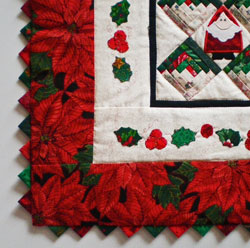 Prairie Points used on the edge of a quilt
Prairie Points
These are also sometimes called Sawtooth Edging, Dogtooth Borders or Cats' Ears.
These small folded triangles are made from either strips of fabric or small square, scraps to finish a quilt's edges.
Prairie points add a great deal of interest with the use of color and texture and are a great addition to any quilt.
Faced Edge
Facings, instead of bindings,
are used to finish the edges of a quilt. The quilt design simply stops
at the edge. A nice finish for contemporary quilts.
Birthing a Quilt
This is a quick method for finishing a quilt's edges. It can be used in combination with adding prairie points or ruffles or just as it is. A quilt backing is sewn with to the quilt top and batting with right sides together, leaving an opening on one side. The quilt is then turned and the opening slip stitched closed. Quilting can be added at this time. A great alternative for baby and art quilts.
The Great Binding Debate
Should binding strips always be cut on the bias?
Some believe bias wears better on the edge of a quilt due the extra threads along a bias line. Straight grain binding, because it has fewer threads along the binding edge, is a weaker edge finish.
But as with all things "quilting", there is never one, single right answer.
For more information on this topic, see The Bias Quilt Binding Debate.
What Makes A Good Binding
Quilters who enter shows find that bindings do count. Even if you don't enter shows, a poor binding can seriously effect a quilt's overall appearance.
A quality quilt binding is:
- Full - the top, batting and backing extend to the very outside edge of the completed binding
- Specific to the type of quilt – an antique looking quilt looks best with a skinny binding
- Covers the stitching line used to attach the binding to the quilt
- Even all around the entire quilt
- Flat - no puckers or twisting
If you've attached your binding by machine and pulled it around to the back to tack down, the hand stitches used should not show on the front of the quilt.
If you use your sewing machine to tack down your binding, if the stitches are to show, make them neat and tie them off properly. If they are meant to be invisible, make them so.
Binding questions from our readers...

Our readers have asked several questions about how to bind their quilts.
Read about their problems and the suggested solutions.
Please add to the conversation by sharing your experiences.
Finish It Up!
Choosing the appropriate quilt binding that compliments your quilt in design, color and quality is, indeed, a fine ending to a wonderful project!
More on quilt binding


By Julie Baird
Copyright © 2008-2024 Generation Quilt Patterns, LLC
All Rights Reserved
Generations-quilt-patterns.com does not sell any personal information. (See Privacy Policy)